
Disclaimer: Devoted Grandma is reader-supported. If you purchase anything through my site, I may receive a small commission (at no cost to you). Thank you.
Every grandmother wants the same thing: for her grandchildren to be safe.
We buckle their seatbelts, remind them to wear sunscreen, ask them to text when they get home, and worry when they don’t answer right away. Love naturally makes us protective.
But sometimes, without meaning to, we can become too protective.
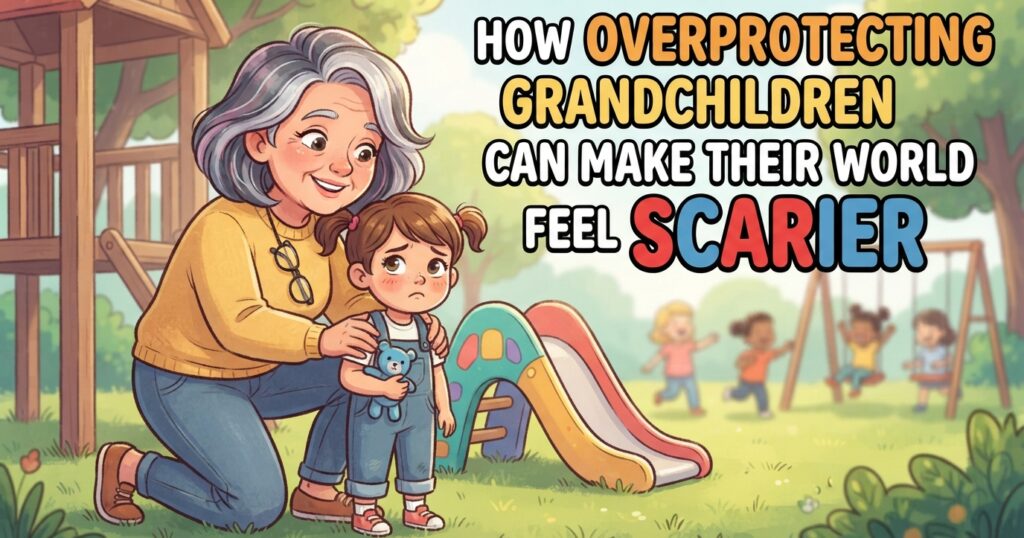
When children constantly hear that everything is dangerous, they can begin to believe that the world itself is something to fear. Instead of feeling prepared for life, they may start feeling unprepared for almost everything.
The goal isn’t to stop protecting our grandchildren. It’s to help them grow into confident people who know they can handle life’s challenges.
Here are a few ways overprotection can unintentionally make the world feel scarier.
They Start Believing Danger Is Everywhere
Children pay close attention to the adults they trust.
If every outing comes with a long list of warnings, every new activity is met with worry, or every stranger is treated as a threat, children begin to assume danger is always just around the corner.
Of course, teaching safety is important. But teaching fear is something different.
Instead of only saying, “Be careful,” we can also say, “You’ve learned how to handle situations like this.”
That small shift reminds them that they aren’t helpless.
They Miss Chances to Build Confidence
Confidence doesn’t appear overnight.
It grows each time a child tries something difficult, solves a problem, or recovers from a small mistake.
If adults step in before grandchildren have the chance to figure things out themselves, those opportunities disappear.
Maybe they struggle tying their shoes.
Maybe they order their own meal at a restaurant.
Maybe they climb a slightly challenging playground structure.
These little moments teach children something powerful:
“I can do hard things.”
That lesson lasts much longer than the temporary comfort of having everything done for them.
Small Risks Teach Big Lessons
No one enjoys seeing a grandchild disappointed or frustrated.
But small setbacks are often the best teachers.
Missing a goal in sports.
Getting a poor grade after not studying enough.
Forgetting homework once.
Losing a board game.
These experiences help children learn responsibility, resilience, and perseverance.
If we remove every obstacle, we may also remove many of life’s greatest lessons.
Anxiety Can Be Passed Down
Children are incredibly observant.
They notice not only what we say, but how we react.
If we panic over every scraped knee, every delayed text message, or every unexpected situation, they may begin believing these situations are emergencies too.
Remaining calm doesn’t mean pretending problems don’t exist.
It means showing them that challenges can usually be handled one step at a time.
Our calmness often becomes their calmness.
They May Doubt Their Own Abilities
Overprotective adults often send an unintended message.
It sounds something like this:
“I don’t think you can handle this.”
That isn’t what we mean.
We simply want to help.
But when help arrives before it’s needed every single time, children may begin doubting themselves.
Instead, we can ask:
“What do you think you should do?”
“I believe you can figure this out.”
Those simple words communicate trust.
And trust is one of the greatest gifts we can give.
They May Become Afraid of New Experiences
Trying new foods.
Joining a sports team.
Sleeping over at a friend’s house.
Traveling.
Starting college.
Every exciting milestone also comes with uncertainty.
Children who have always been shielded from uncertainty may hesitate to embrace these opportunities because unfamiliar situations feel overwhelming.
The more positive experiences they have stepping outside their comfort zone, the more confidence they’ll gain for the future.
Independence Is Built One Step at a Time
No child becomes independent overnight.
It happens gradually.
First they pour their own cereal.
Then they pack their school bag.
Later they manage homework, friendships, jobs, and eventually families of their own.
Each small responsibility prepares them for the next one.
When we allow grandchildren to take age-appropriate responsibility, we’re quietly preparing them for adulthood.
We Can Protect Without Overprotecting
Being protective doesn’t have to mean preventing every challenge.
Instead, we can become guides.
We prepare them.
Teach them.
Practice with them.
Encourage them.
And then, little by little, let them try.
We’ll still be nearby if they need us.
But they’ll also discover something even more valuable—that they are stronger and more capable than they realized.
The World Has Wonderful Things Too
Yes, the world contains risks.
But it also contains beautiful friendships, exciting adventures, acts of kindness, meaningful opportunities, breathtaking places, and people who will encourage them along the way.
Our grandchildren deserve to know about both.
When we focus only on danger, they miss out on hope.
When we teach both caution and confidence, they learn to move through life wisely instead of fearfully.
As grandmothers, one of the greatest gifts we can give isn’t simply keeping our grandchildren safe today.
It’s helping them become adults who feel brave enough to embrace tomorrow.



