Disclaimer: Devoted Grandma is reader-supported. If you purchase anything through my site, I may receive a small commission (at no cost to you). Thank you.
Your 12-year-old grandson, Noah, recently moved with his family to a new town. That means a new neighborhood, a new school, new teachers—and, hardest of all, new classmates.
During your weekly phone call, you notice he seems unusually quiet. Normally he tells you about video games, funny things that happened at school, or what he wants for dinner when he visits.
This time, after a long pause, he says quietly:
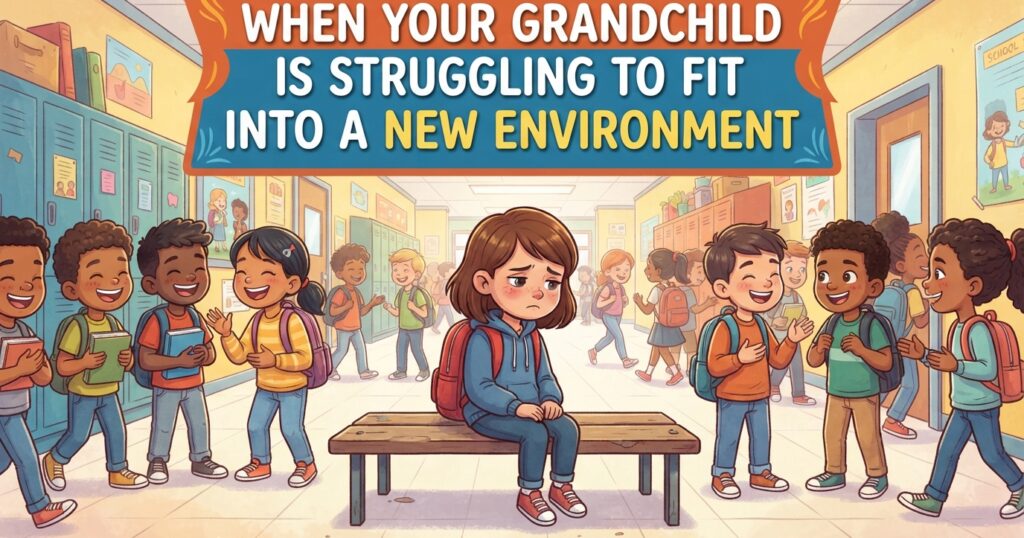
“Grandma, I don’t think anyone likes me here. Everybody already has their friends. At lunch I mostly just sit there. I wish we never moved.”
Your heart aches.
You want to scoop him up, fix everything, and remind him what a wonderful boy he is. At the same time, you know that fitting into a new environment can take time, and you don’t want him to feel as though you’re dismissing how lonely he feels.
When a grandchild tells us, “I don’t think anyone likes me,” those words can go straight to a grandmother’s heart.
Our natural instinct is often to make the pain disappear. We want to reassure, protect, advise, intervene—or perhaps remind our grandchild of all the reasons there is nothing to worry about.
But when a child is struggling to fit into a new environment, what they often need first is not a solution.
They need to feel understood.
Let’s look at each response.
Option A: “Don’t worry. You’ll make friends eventually.”
There is certainly love behind this response.
And it may even be true. Most children do gradually find people they connect with after entering a new school or neighborhood.
But reassurance given too quickly can sometimes feel like dismissal.
When Noah says, “I don’t think anyone likes me,” he is not necessarily asking Grandma to predict the future. He is describing how the present feels.
If Grandma immediately says, “Don’t worry,” he may hear something closer to, “This isn’t a big deal.”
Changing the subject to cheer him up may also unintentionally communicate that uncomfortable feelings should be pushed away.
Children need opportunities to discover that sadness, loneliness, embarrassment, and uncertainty are feelings they can talk about safely.
A warmer response might begin with, “That sounds really lonely.”
Those simple words tell him: Grandma is listening.
Option B: “They’re the ones missing out.”
This response comes from fierce grandmotherly loyalty.
When someone hurts our grandchild, even unintentionally, it can be tempting to take their side immediately.
But telling Noah that the other children are the problem may encourage him to see the situation as “me versus them.”
In reality, the other children may not be rejecting him at all. They may simply be comfortable in their existing friendships, shy themselves, or unaware that Noah is hoping to be included.
Children learning to navigate friendships benefit from curiosity rather than quick conclusions.
Instead of assuming, “They don’t like you,” Grandma might gently ask:
“Is there anyone who seems friendly?”
That question helps Noah notice possibilities rather than only rejection.
Option C: Ask the adults to step in immediately.
Sometimes adult intervention is absolutely appropriate.
If Noah were being bullied, threatened, repeatedly excluded on purpose, or showing signs of serious distress, his parents and school should certainly know.
But based on what he has shared here, immediately arranging friendships for him might solve too much too quickly.
At twelve, children are gradually developing confidence in handling social situations themselves.
If adults immediately take over, Noah might begin to believe, “I can’t handle this unless someone fixes it for me.”
A grandmother can support him without taking away his growing independence.
And that brings us to Option D, the best response.
Option D: Listen first, then help him find one small next step.
This response combines compassion with confidence.
Grandma might say:
“That sounds really hard, sweetheart. Walking into a place where everyone already seems to know each other can feel terribly lonely.”
Then she pauses.
She listens.
Perhaps Noah says more.
Maybe lunchtime is the hardest part. Maybe there is one boy in science class who seems nice. Maybe he is afraid people will think he is awkward if he tries to join a conversation.
Only after Noah feels heard does Grandma gently shift toward possibility.
She might ask:
“Would you like us to think of one small thing you could try this week?”
Notice the words one small thing.
Not “Go make friends.”
That can feel enormous.
Instead, the step might be sitting near someone different at lunch, asking a classmate about homework, complimenting someone’s shoes, joining an activity, or simply saying hello to the same person a few days in a row.
Small social risks are often how friendships begin.
There is another important message hidden inside Grandma’s response:
I believe you can handle this.
She is not abandoning him to solve the problem alone.
And she is not rushing in to solve it for him.
She is standing beside him while he learns.
That balance, warmth plus confidence, is a powerful gift grandparents can offer.
The Grandma Takeaway
When grandchildren struggle to fit into a new environment, we may wish we could hand them instant friendship and belonging.
Unfortunately, belonging usually grows slowly.
A conversation here.
A shared laugh there.
Someone saving them a seat.
Someone remembering their name.
Our role is not always to remove the uncomfortable beginning.
Sometimes it is to help our grandchildren move through it without feeling alone.
Listen before advising.
Name the feeling before fixing the problem.
Ask questions before making assumptions.
And when the time feels right, help them find one small, manageable next step.
Most of all, remind them through your presence, not just your words, that they already have one place where they belong completely.
With you.