
Disclaimer: Devoted Grandma is reader-supported. If you purchase anything through my site, I may receive a small commission (at no cost to you). Thank you.
Fourteen-year-old Maya usually talks nonstop when she visits her grandmother, Rose. She tells her about school gossip, new songs, funny videos, and the small dramas of everyday life.
But this afternoon, Maya is unusually quiet.
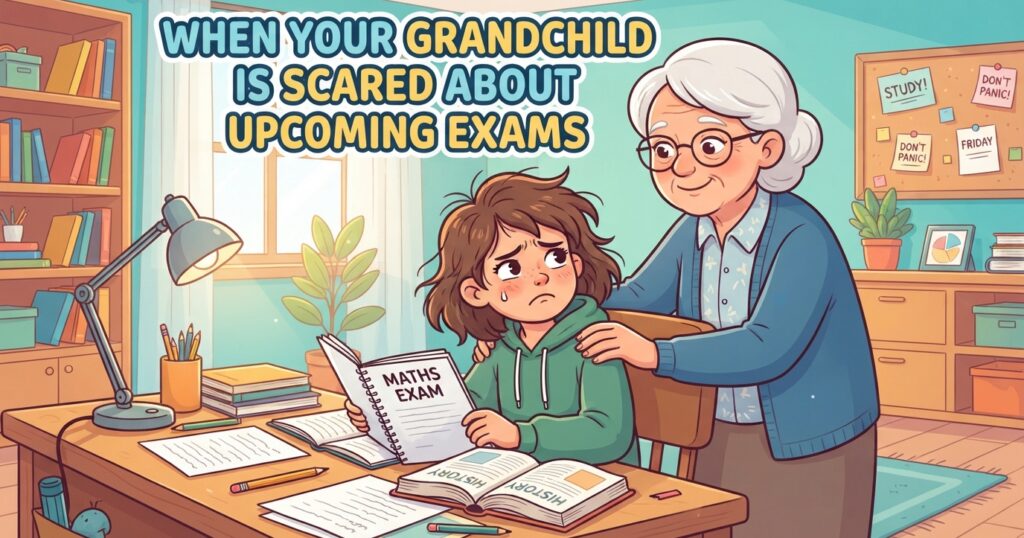
She sits at the kitchen table, staring at an open science textbook while slowly turning a pencil between her fingers. Rose places a plate of sliced fruit beside her and gently asks, “Is everything all right, sweetheart?”
Maya shrugs without looking up.
After a long pause, she says, “Exams start next week. I’m going to fail science. I just know it.”
Rose sits beside her. “Have you been having trouble understanding the work?”
“I understand some of it,” Maya says, her eyes filling with worry. “But when I think about the exam, my mind goes blank. Mum keeps saying I need good marks, and everyone in my class seems more prepared than me.”
Rose’s heart aches. She wants to protect Maya from disappointment, but she also wants to help her feel capable and supported.
What should Grandma Rose say?
A. “You shouldn’t be this worried. It’s only an exam, and worrying will just make things worse.”
B. “I’ll speak to your mother and tell her she is putting too much pressure on you.”
C. “That sounds frightening. Let’s slow down, look at what feels hardest, and make a small plan together.”
D. “You’re a clever girl. I’m sure you’ll get a good mark, so there’s no need to think about failing.”
When a grandchild is frightened about exams, our first instinct may be to make the fear disappear. We want to reassure, solve, protect, or perhaps give a firm little speech about keeping things in perspective.
But fear does not always disappear simply because an adult says it should.
For Maya, the exam is not “only a test.” It has become connected to several deeper worries: disappointing her parents, comparing herself with classmates, forgetting what she has learned, and perhaps wondering whether a poor result would mean she is not intelligent enough.
The most helpful response is the one that takes her feelings seriously while also helping her regain a sense of control.
Option A: “You shouldn’t be this worried. It’s only an exam.”
A grandmother may choose this response because she wants to calm the situation. From an adult perspective, one exam may seem small compared with the many challenges life eventually brings.
Rose might remember exams she once worried about and realize that, years later, they did not matter nearly as much as she thought they would. She may hope that sharing this perspective will help Maya relax.
However, telling a frightened child that she “shouldn’t” feel worried can accidentally make her feel misunderstood. Maya may hear, “Your feelings are silly,” even though that is not what Rose intends.
She may then carry two burdens instead of one: fear about the exam and embarrassment about being afraid.
A gentler approach would be to acknowledge that exams can feel important and stressful, especially when a child believes that other people’s approval depends on the result.
Perspective can be helpful later, but connection should usually come first.
Option B: “I’ll speak to your mother and tell her she is putting too much pressure on you.”
This response comes from a loving, protective place. Many grandmothers are deeply sensitive to moments when their grandchildren seem overwhelmed, and Rose may feel tempted to step in immediately.
There may indeed be a conversation worth having with Maya’s mother. Parents sometimes communicate concern in ways that children experience as pressure, even when the parent’s intention is encouragement.
Still, taking action without first asking Maya what she wants could create a new problem. Maya might worry that she has caused conflict between her mother and grandmother. She might also become less willing to share her feelings in the future if she believes every private conversation will be reported.
Before stepping in, Rose could ask, “Would you like help talking to your mum about how you’re feeling?”
That question keeps Maya involved. It respects her voice and teaches her that support does not have to mean losing control of the situation.
Option C: “That sounds frightening. Let’s slow down, look at what feels hardest, and make a small plan together.”
It begins with empathy: “That sounds frightening.”
Those simple words tell Maya that she is not being dramatic, foolish, or weak. Her grandmother sees her fear and is willing to sit beside her in it.
Rose then says, “Let’s slow down.” Anxiety often makes everything feel enormous and urgent. A child may think about the entire exam, every chapter, every possible mistake, and every imagined consequence all at once.
Slowing down helps turn one overwhelming problem into several manageable pieces.
Rose might ask, “Which part of science feels most confusing?” or “Is it remembering facts, understanding the questions, or worrying that your mind will go blank?”
Once Maya identifies the hardest part, they can create a simple plan. They might choose two topics to review that evening, prepare a few practice questions, schedule short study breaks, or ask the teacher for clarification the next day.
The goal is not for Rose to take over the studying. It is to help Maya move from helplessness toward action.
This response also teaches an important emotional lesson: courage does not mean feeling no fear. Courage can mean naming the fear, asking for help, and taking one small step anyway.
Rose can also remind Maya that rest matters. A frightened student may believe she must study for hours without stopping. Yet an exhausted mind often struggles to concentrate and remember information.
A balanced plan might include study time, food, movement, sleep, and something relaxing before bed.
Most importantly, Rose should avoid making her love or approval sound connected to the exam result. She might say, “I’m proud of the effort you’re making, and one mark could never change how I see you.”
That kind of reassurance does not promise success. It promises something more dependable: a secure relationship.
Option D: “You’re clever. I’m sure you’ll get a good mark.”
This answer sounds encouraging, and many grandmothers would say it with complete sincerity. Rose wants Maya to believe in herself.
The difficulty is that it makes a promise Rose cannot guarantee.
If Maya later receives a poor mark, she may feel she has disappointed her grandmother. She may also conclude that being “clever” is something proved only by high grades.
Children benefit from praise that focuses on qualities they can use: preparation, persistence, curiosity, honesty, and willingness to ask for help.
Instead of saying, “I’m sure you’ll get a good mark,” Rose could say, “I’ve seen you work through difficult things before. Let’s think about what will help you prepare.”
That offers confidence without dismissing the real challenge.
A Grandmother’s Gentle Role
A grandmother does not always need to have the perfect solution. Sometimes her greatest gift is to be the calm person who listens without judgment.
When a grandchild is anxious, begin by recognizing the feeling. Then help her separate facts from frightening predictions. “I’m going to fail” is a prediction, not a certainty. “I don’t understand two chapters yet” is a specific problem that can be addressed.
Ask what kind of help would feel useful. Some grandchildren want assistance making a study schedule. Others need someone to test them with flashcards. Some simply need a quiet place to talk.
And remember that exam anxiety can sometimes become intense. If a child is regularly unable to sleep, becomes physically unwell, cannot attend school, or seems overwhelmed for a long period, it may be wise for the parent to speak with a teacher, school counselor, or health professional.
Our grandchildren will face many tests in life, most of which will not be written on paper. In these moments, we can teach them that fear is not something they must hide and that asking for support is a sign of wisdom, not weakness.
Years from now, Maya may not remember every science question. But she may remember sitting at her grandmother’s kitchen table and hearing, “You don’t have to face this whole thing at once. Let’s take the next step together.”



