
Disclaimer: Devoted Grandma is reader-supported. If you purchase anything through my site, I may receive a small commission (at no cost to you). Thank you.
You are visiting your 13-year-old granddaughter for the afternoon. She has been quieter than usual, but when you asked how she was doing, she gave you a quick smile and said, “I’m fine.”
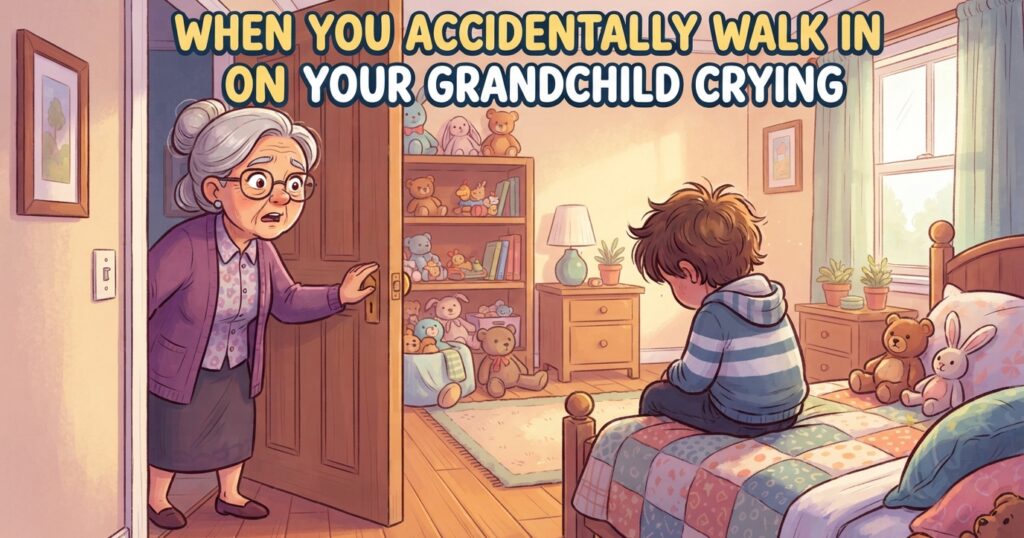
A little later, you walk down the hallway looking for the bathroom. You accidentally open her bedroom door without knocking and find her sitting on the floor beside her bed, quietly crying.
She looks startled, quickly wipes her face, and says, “Grandma! Please go away. I don’t want to talk about it.”
Your heart aches. You want to comfort her, but you also know she is asking for space.
When we see a grandchild crying, every loving instinct inside us may say, “Do something. Fix it. Make the pain stop.”
That instinct comes from love. Grandmothers have often spent decades comforting scraped knees, calming fears, and finding words of reassurance. Yet as grandchildren grow older, comfort sometimes needs to look different. Instead of immediately stepping closer, the most loving response may be to pause, respect a boundary, and leave the door open for connection.
Let us look carefully at each response.
Option A: Sit beside her and insist that she talk
This choice may feel caring and responsible. You might worry that if you leave, she will feel alone. You may also believe that talking is the first step toward solving whatever has happened.
However, insisting that she explain herself can make a vulnerable moment feel even more overwhelming. Your granddaughter has already been surprised and embarrassed by being seen crying. When she says, “Please go away,” she is trying to regain a sense of privacy and control.
If you ignore that request, she may feel that her emotions belong to everyone except her. She might also become more guarded in the future, hiding her feelings because she fears being pressured to explain them.
There will be times when a child or teenager needs an adult to step in despite resistance, especially when there are signs that the child may be unsafe. But ordinary tears do not automatically mean an emergency. In this moment, gentle availability is likely to build more trust than insistence.
Option B: Leave and never mention it again
Giving her space is an important part of a respectful response. This option recognizes that grandchildren, especially older children and teenagers, need privacy.
Still, saying nothing at all may unintentionally communicate that you did not notice her pain or did not know how to respond. She might interpret your silence as discomfort, disapproval, or lack of interest.
A child who says, “I don’t want to talk,” may truly need time. But she may also be quietly wondering, “Will Grandma still care? Will she be there later? Did I make things awkward?”
Respecting privacy does not require pretending that nothing happened. A brief, gentle acknowledgment can reassure her without putting pressure on her.
Option C: Apologize, offer support, and give her privacy
This is the best response.
You might say, “I’m sorry, sweetheart. I should have knocked. You don’t have to talk, but I’m here if you want me. I’ll give you some space.”
Then you leave the room.
This response does several helpful things at once.
First, you apologize for entering without knocking. Even though it was accidental, the apology shows that you respect her room and her boundaries. Children learn what respectful relationships look like when adults are willing to acknowledge mistakes.
Second, you accept her answer. You do not force her to explain her tears before she is ready. This helps her feel emotionally safe rather than cornered.
Third, you make your support clear. You are not abandoning her. You are letting her know that the connection remains available.
Finally, you give her control over what happens next. During emotional moments, having a little control can help children and teenagers settle themselves. She may decide to talk five minutes later, that evening, or not at all. Your calm response increases the chance that she will trust you when she does need support.
Later, you might gently reconnect without making the crying the center of attention. You could offer her a snack, ask whether she would like to take a walk, or simply sit near her while doing something ordinary. Side-by-side moments often feel less intense than face-to-face questioning.
You might say, “Would you like some tea with me?” or, “I’m going outside for a little walk. You’re welcome to join me.”
These invitations create closeness without demanding disclosure.
Option D: Tell her parents immediately
Grandparents and parents should work together when a child’s safety or well-being is at risk. If your granddaughter says something alarming, appears to be in danger, or shows a serious and continuing change in behavior, involving her parents would be important.
But immediately reporting a single private crying moment may damage trust, especially if her parents respond by questioning her forcefully. She may feel exposed or betrayed.
Before sharing, consider the whole situation. Is this an ordinary emotional moment, or are there signs of a larger concern? Has she become withdrawn for a long period? Is she frightened of someone? Has she stopped participating in daily life? Is there a reason to believe she is unsafe?
If you are genuinely worried, you can speak to her again gently or share your concern with her parents in a careful, non-dramatic way. But tears alone do not always require immediate intervention. Children cry for many reasons: friendship troubles, school pressure, disappointment, embarrassment, tiredness, or feelings they cannot yet name.
The wisdom of leaving the door open
A grandmother’s presence can be a powerful comfort, even when very few words are spoken.
The goal is not to make your grandchild tell you everything. The goal is to become someone with whom she feels safe enough to share when she is ready.
Trust grows through small moments. It grows when you knock before entering. It grows when you listen without rushing to correct. It grows when you do not turn every tear into an investigation. It grows when you remain warm and steady, even when your grandchild pulls away for a little while.
Later, you can remind her gently, “You never have to tell me anything before you’re ready. But you also never have to carry hard feelings alone.”
That is one of the greatest gifts a grandmother can offer: not perfect answers, but a calm, loving place to land.
Sometimes the wisest response is neither to rush in nor to disappear. It is to say, with both words and actions, “I respect your space, and I am still here.”



