Disclaimer: Devoted Grandma is reader-supported. If you purchase anything through my site, I may receive a small commission (at no cost to you). Thank you.
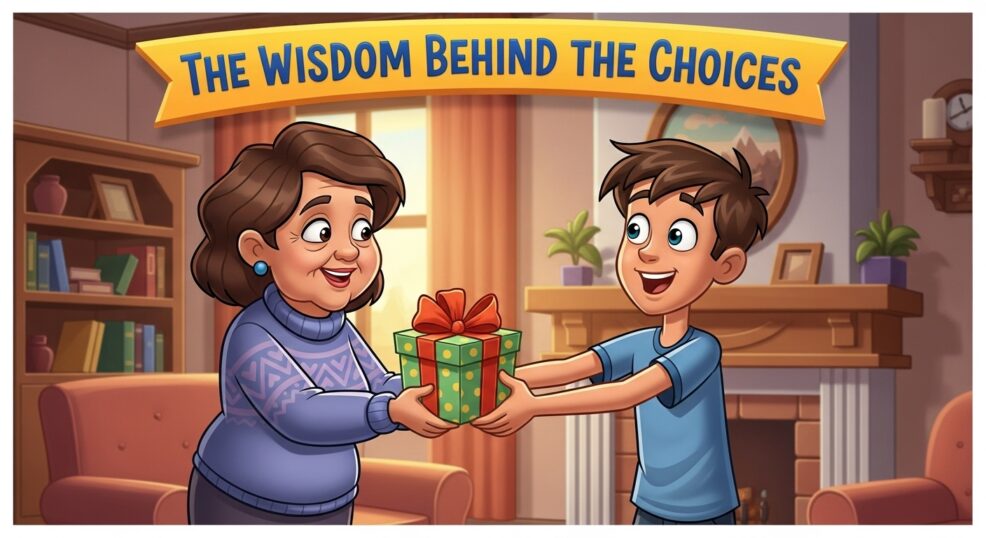
You adore your 9-year-old grandson, Caleb. He knows Grandma’s house is the place where there’s always a treat in the cupboard, a little extra screen time, and often a surprise waiting for him.
Lately, though, his requests have been getting bigger.
During a Saturday outing, Caleb spots an expensive remote-control car in a shop window.
“Grandma, can I have it? Please? I really, really want it.”
You hesitate. His birthday was only a few weeks ago, and you already bought him several gifts. His parents have also mentioned that they are trying to teach him to save his allowance and understand that he cannot have everything immediately.
Caleb notices your hesitation and wraps his arms around you.
“But you always get me things,” he says sweetly. “You’re the best grandma.”
Your heart melts.
You could afford the toy. And part of you thinks, Isn’t spoiling grandchildren one of the joys of being a grandmother?
But another part of you wonders whether always saying yes is really helping him.
There is something especially tender about being able to give a grandchild something that lights up his face.
After years of raising children, budgeting, saying no, enforcing bedtimes, and worrying about responsibilities, grandmotherhood can feel like a chance to enjoy the sweeter side of family life. We want our grandchildren to associate us with warmth, generosity, fun, and comfort.
There is nothing wrong with that.
But there is an important difference between being a generous grandmother and becoming the grandmother who feels she must always say yes.
And that difference can shape a child in ways we may not intend.
Option A: Buy the toy because you can
This choice comes from love.
Many grandmothers would think, If I have the money and it makes him happy, what is the harm?
Occasional treats are certainly not harmful. Surprise ice creams, birthday gifts, small toys, special outings, and little indulgences can become treasured memories.
The concern begins when treats stop being treats and become expectations.
When a child repeatedly receives something simply because he asks for it, he may gradually lose opportunities to practice patience, gratitude, saving, disappointment, and self-control.
Those skills do not magically appear when children grow older. They develop through small childhood experiences of wanting something and discovering, “I can want this very badly and still be okay without getting it today.”
If Grandma always removes that discomfort, she may accidentally remove the lesson too.
There is another risk as well. A child may begin to connect Grandma’s love with what Grandma provides.
Instead of thinking, Grandma loves spending time with me, he may start thinking, Grandma is the person who buys me things.
That is probably the opposite of what any grandmother wants.
Option B: Tell him he is spoiled
This response recognizes that a boundary is needed, but the wording could do unnecessary damage.
Calling a child “spoiled” turns a behavior into an identity.
There is a big difference between saying, “We don’t buy something every time we want it,” and saying, “You are spoiled.”
Children often remember labels.
Even when we are frustrated, it is better to correct the behavior without defining the child by it.
Caleb is not doing something terribly unusual. He has learned from experience that asking Grandma often works. Naturally, he will continue asking.
In fact, if Grandma has consistently said yes in the past, Caleb may not even understand why the rules suddenly changed.
That means Grandma can take responsibility for changing the pattern without shaming him for having learned it.
Option C: Say no kindly and help him work toward it
This is the best response.
It combines warmth with a boundary.
Grandma might say, “I can see how much you like that car. It really is exciting. We’re not buying it today, but if you still want it, we can write down the price and figure out how long it would take you to save for it.”
Notice what this does.
First, it acknowledges the feeling.
Caleb is allowed to want the toy.
Second, it makes clear that wanting something does not automatically mean receiving it.
Third, it gives him a constructive path forward.
Perhaps he saves part of his allowance. Perhaps Grandma agrees to contribute a small amount after he reaches a savings goal. Perhaps he adds it to a birthday or Christmas wish list.
Now Grandma is not simply denying him something.
She is helping him develop patience, planning, and a sense of accomplishment.
And there is something wonderful about seeing a child finally purchase something he has saved for himself. The pride often lasts much longer than the excitement of an impulsive gift.
Option D: Secretly buy it anyway
This option may feel like a clever compromise.
Grandma avoids disappointing Caleb, while also avoiding an argument with his parents.
But secrets like this can create a more serious problem.
Grandparents and parents do not have to agree about everything. Different households can have different rules.
However, deliberately going behind a parent’s back teaches a child something uncomfortable: when Mom or Dad says no, Grandma may be a way around the answer.
That puts the child in the middle of the adult relationship.
It can also weaken trust between Grandma and the parents.
A strong grandparent-grandchild relationship grows best when Grandma is a safe, loving person, not a secret route around Mom and Dad.
The deeper lesson: love does not always look like “yes”
Many grandmothers worry that saying no will somehow make them less special.
But children rarely build their deepest bonds with grandparents because of toys.
They remember sitting beside Grandma while she made pancakes.
They remember her stories.
They remember the silly songs she sang, the walks they took, the games they played, and the way she listened when something was bothering them.
Those are the gifts that become part of a child’s emotional foundation.
Generosity is beautiful.
But generosity does not have to mean unlimited giving.
Sometimes the most loving gift a grandmother can give is the experience of hearing, “Not today,” while still feeling completely loved.
A grandchild who learns that Grandma can say no and still remain warm, attentive, playful, and affectionate learns something valuable about relationships.
Love is not something we purchase.
Love remains even when we do not get exactly what we want.
So yes, spoil your grandchildren sometimes.
Buy the ice cream.
Slip a surprise book into their backpack.
Take them somewhere special just because you can.
But also give them the gift of waiting.
The gift of earning.
The gift of gratitude.
And perhaps most importantly, give them the confidence of knowing that your relationship is built on something far more lasting than what Grandma can buy.