
Disclaimer: Devoted Grandma is reader-supported. If you purchase anything through my site, I may receive a small commission (at no cost to you). Thank you.
Your 15-year-old granddaughter, Maya, is spending the afternoon with you. While she’s getting ready to meet a few friends, you notice she’s wearing a little makeup and an outfit that feels much more grown-up than what you’re used to seeing her in.
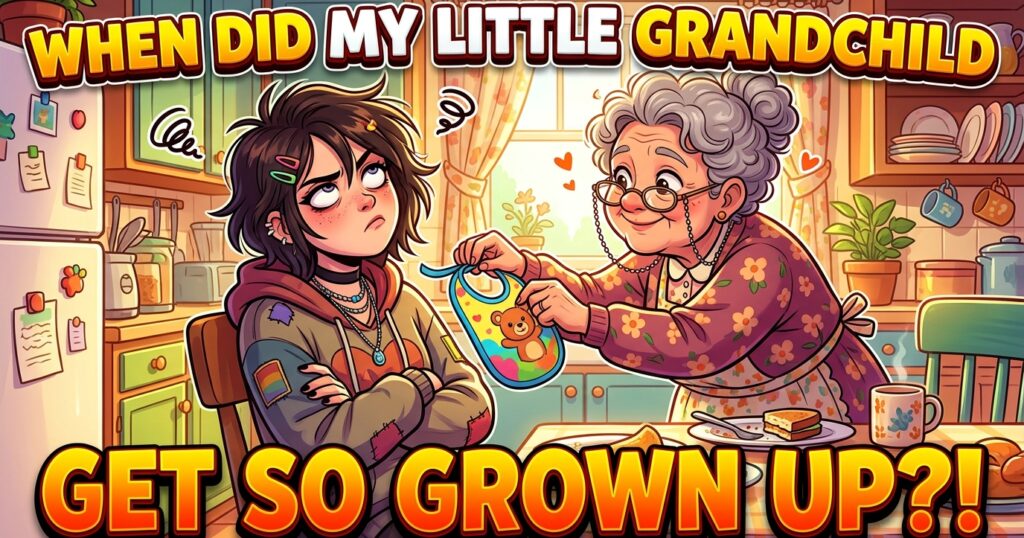
Without thinking much about it, you smile and say, “Oh, sweetheart, you look so grown up. I still remember when you wouldn’t leave the house without that stuffed rabbit tucked under your arm!”
Maya gives you a tight smile.
Later, when you remind her to take a sweater, text you when she arrives, stay with her friends, and be home exactly when she said she would, she sighs.
“Grandma, I’m not eight years old anymore.”
Her words sting a little.
You know she’s growing up. Of course you do. But in your heart, part of you still sees the little girl who used to crawl into your lap, ask you to tie her shoes, and beg for one more bedtime story.
You want to protect her, but you also don’t want her to feel as though you don’t see who she is becoming.
There is something especially bittersweet about watching a grandchild become a teenager.
One day, she is reaching for your hand before crossing the street. Then, seemingly overnight, she is asking for privacy, choosing her own clothes, making plans with friends, and saying things like, “Grandma, I can handle it.”
For many grandmothers, the instinct to protect does not disappear simply because a grandchild gets taller.
But adolescence asks something new of us.
It asks us to love just as deeply while gradually holding a little less tightly.
A: “You’ll always be a child to me.”
There is plenty of love behind this response.
Most grandmothers who say something like this are not trying to belittle their grandchildren. They are expressing something deeply emotional: I have loved you since you were small, and that part of my heart has not changed.
The difficulty is that a teenager may hear something very different.
She may hear, You don’t see me growing.
During the teenage years, young people are working hard to form an identity separate from childhood. They want the important adults in their lives to notice their growing judgment, opinions, abilities, and independence.
So although “you’ll always be my little girl” may feel affectionate to Grandma, saying it during a disagreement about independence can make a teenager feel dismissed.
You can certainly treasure the child she once was.
Just be careful not to let those memories obscure the young person standing in front of you today.
B: Stop giving advice completely.
This response swings to the opposite extreme.
After hearing “I’m not a little kid anymore,” a grandmother might think, Fine. I’ll back off completely.
But teenagers still benefit tremendously from caring adults.
Growing independence does not mean they no longer need guidance, reassurance, reminders, or wisdom. In fact, adolescence is often a confusing mixture of confidence and uncertainty.
A teenager may want freedom in one moment and desperately want reassurance the next.
The goal is not to disappear from her life.
It is to adjust your role.
Instead of automatically instructing, you might begin asking.
Instead of saying, “Take a sweater. It’s going to get cold,” you might say, “Looks chilly later, do you think you’ll want a sweater?”
That small shift gives her room to make the decision while still communicating care.
C: Acknowledge the change and ask what support helps.
This is the best response.
Imagine saying:
“I think you’re right, sweetheart. Sometimes I still picture you as the little girl you used to be, and I may fuss over you more than you need now. I’m learning, too. What kind of help from me feels useful these days?”
That kind of answer does something powerful.
It tells your grandchild, I see that you are growing.
Teenagers often become more cooperative when they feel respected rather than controlled. Asking for their perspective does not mean handing over every boundary or abandoning adult judgment.
It simply creates a conversation.
Maybe Maya tells you she does not mind being reminded to text when she arrives somewhere, but she dislikes being told what to wear.
Maybe she appreciates advice about friendships but wants to make her own decisions about her hairstyle.
Those conversations help a grandmother learn where support is welcome and where a little more independence may strengthen the relationship.
Just as importantly, admitting that you are adjusting models humility.
You are showing her that even adults can listen, learn, and change.
D: “Teenagers think they’re more grown-up than they are.”
There is some truth tucked inside this response.
Teenagers are still developing judgment, emotional regulation, and decision-making skills. Adults absolutely continue to play an important protective role.
But saying this directly to a teenager during a disagreement often creates defensiveness.
She is unlikely to hear, I want to keep you safe.
She may hear, Your thoughts don’t matter because you’re young.
There will certainly be times when adults must set limits.
Safety rules, family expectations, school responsibilities, and major decisions still require guidance.
But limits tend to work better when paired with respect.
You can say, “I understand why you want more freedom,” even when the answer to a particular request is still no.
Respect and boundaries can live in the same sentence.
Growing With Them
One of the quiet challenges of grandparenting is realizing that every stage of childhood requires us to learn a slightly different way of loving.
The toddler needed your hand.
The six-year-old needed your encouragement.
The ten-year-old needed your stories.
And the teenager may need something that can feel surprisingly difficult:
Room.
Room to choose.
Room to disagree.
Room to make small mistakes.
Room to show you who they are becoming.
None of this means your wisdom is no longer important.
Quite the opposite.
A teenager who feels respected is often far more likely to come back to Grandma when she truly needs advice.
So when you catch yourself treating your teenage grandchild like the little child you remember, do not scold yourself.
Smile at the memory.
Then look again at the young person in front of you.
You might even say:
“I know you’re growing up. Sometimes my heart just takes a little longer to catch up.”
That sentence can open a door.
Because the goal is not to stop seeing the child they once were.
It is to make sure they also know that you see and respect the person they are becoming.



