Disclaimer: Devoted Grandma is reader-supported. If you purchase anything through my site, I may receive a small commission (at no cost to you). Thank you.
Your 13-year-old granddaughter, Maya, has spent months practicing for the school volleyball team.
She stayed after school to work on her serve. She practiced in the driveway on weekends. She even turned down a few invitations from friends because she wanted to be ready for tryouts.
This afternoon, she walks through your front door unusually quietly.
You ask how tryouts went.
Her eyes immediately fill with tears.
“I didn’t make it, Grandma.”
Then she drops her backpack on the floor and says, “I’m terrible at volleyball. I should never have tried.”
Your heart aches.
You know how hard she worked. You also know how badly she wanted this.
Every grandmotherly instinct inside you wants to take the hurt away.
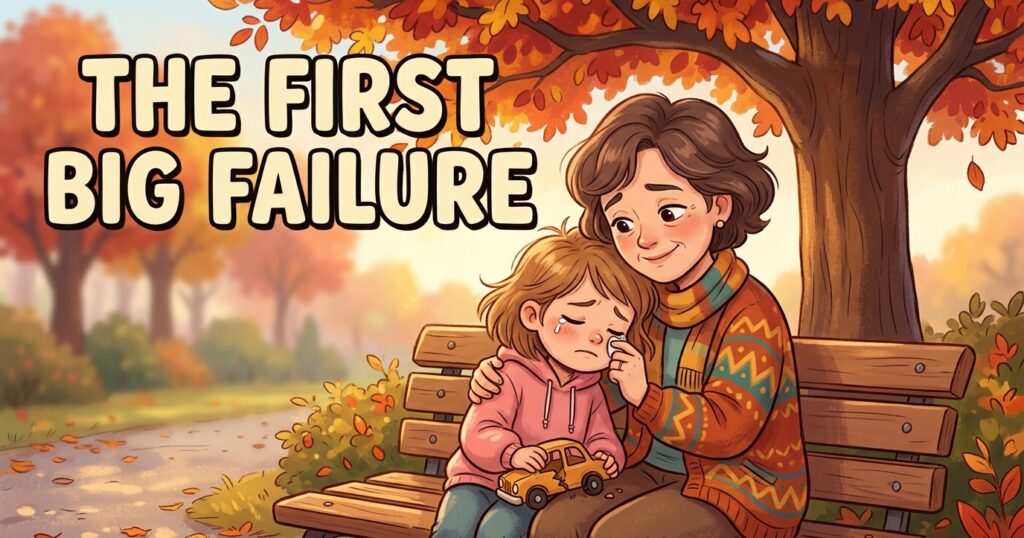
There are few things harder for a grandmother than watching a grandchild experience real disappointment.
When they are little, many hurts can be fixed rather quickly. A scraped knee gets a bandage. A lost toy can sometimes be replaced. A frightening dream can be soothed with a cuddle.
But eventually, our grandchildren meet a different kind of pain.
They try hard and still lose.
They prepare and still fail.
They hope and still hear no.
And when that happens, our natural instinct is often to protect them from the hurt.
But sometimes the most loving thing a grandmother can do is not remove the disappointment.
It is to help a grandchild discover that disappointment can be survived.
Why Option A Is So Tempting
“You deserved to make the team.”
Oh, how easy those words are to say.
When someone we love is hurting, we often rush to take their side. We want them to know that we believe in them completely.
And there is something beautiful about a grandmother being a safe place where a child feels cherished and supported.
But blaming the coach may create a problem.
Grandma does not actually know why Maya was not chosen. Perhaps other players had stronger skills. Perhaps there were only a few available positions. Perhaps Maya still has areas where she needs to grow.
If Grandma immediately says the decision was unfair, Maya may learn to protect herself from disappointment by blaming someone else.
Children eventually need to discover an important truth:
Sometimes we can work very hard and still not get the result we hoped for.
That does not mean our effort was meaningless.
And it does not mean someone cheated us.
Why Option B Can Accidentally Minimize the Pain
“It’s only volleyball.”
Grandma means well.
She sees the larger picture.
She knows Maya has many gifts, many opportunities, and many years ahead of her. Someday this disappointment may seem very small.
But to Maya, it is not small today.
It is enormous.
When adults quickly say, “It’s not a big deal,” children can sometimes hear something very different:
“You shouldn’t feel this upset.”
Yet emotional resilience does not come from pretending disappointment does not hurt.
It develops when a child learns, “I can feel deeply disappointed, and eventually I will be okay.”
Grandma can help make that lesson possible by taking the feeling seriously, even when the situation itself may not seem enormous from an adult perspective.
Why Option C Is Helpful but Too Soon
This option may sound wonderfully practical.
Extra coaching.
More practice.
A plan for next year.
And later, those ideas may be exactly what Maya needs.
Problem-solving is an important life skill.
But there is a timing issue.
When a child is emotionally flooded, she usually needs connection before strategy.
Imagine coming home after something deeply disappointing and immediately hearing a list of ways you could improve.
Even loving suggestions may sound like:
“You failed because you weren’t good enough.”
That is probably not what Grandma means at all.
But it may be what Maya hears.
There will be time tomorrow, or next week, to ask whether she wants to try again.
Tonight, she may simply need permission to be sad.
Why D Is the Best Response
“I know how much you wanted this.”
Those words do something powerful.
They tell Maya:
Grandma sees me.
Grandma sees the hours of practice.
Grandma sees the courage it took to try.
Grandma sees the disappointment.
And Grandma is not frightened by my sadness.
This is why D is the best response.
Notice what Grandma does not say.
She does not tell Maya she should not be upset.
She does not criticize the coach.
She does not immediately turn the experience into a lesson.
And she does not rush to repair the situation.
She simply stays close.
This is emotional validation: the simple act of acknowledging that another person’s feelings make sense given what they have experienced.
Validation does not mean agreeing with everything a child says.
If Maya says, “I’m terrible at volleyball,” Grandma does not have to agree.
Later she might gently say, “Not making one team doesn’t tell us everything about what you’re capable of.”
But first, Grandma can respond to the feeling underneath those words.
The feeling is:
“I tried so hard, and I’m devastated.”
And that feeling deserves compassion.
The Quiet Gift Hidden Inside Failure
Grandparents sometimes have a unique advantage during moments like these.
Parents may already be thinking about lessons, schedules, coaches, grades, practices, or what comes next.
Grandma can sometimes offer something wonderfully simple.
Presence.
A cup of cocoa.
A quiet couch.
A listening ear.
A reminder that the relationship has not changed one bit because of a disappointing result.
Later, perhaps Maya will decide to try again.
Maybe she will ask the coach what she can improve.
Maybe she will practice for another year.
Or perhaps she will discover another activity she loves even more.
But those decisions do not have to be made tonight.
Tonight, Grandma can teach a deeper lesson without giving a lecture:
“You are still loved when you lose.”
“You are still worthy when you fail.”
“You do not have to hide your disappointment from me.”
And perhaps most importantly:
“You can survive feelings that seem unbearable at first.”
One of the greatest gifts we can give our grandchildren is not a life without failure.
No grandmother has the power to give them that.
But we can give them something far more lasting.
We can become the person who sits beside them when life does not turn out the way they hoped.
We can resist the urge to immediately fix, explain, defend, or advise.
Sometimes love simply says:
“I know this hurts.
And you don’t have to go through the hurting alone.”