Disclaimer: Devoted Grandma is reader-supported. If you purchase anything through my site, I may receive a small commission (at no cost to you). Thank you.
Planning a visit with a grandchild can begin to feel like a one-woman production. You think about meals, weather, transportation, attention spans, cost, and whether the activity you chose will still sound appealing when the day arrives.
There is a gentler way to plan. Instead of arranging every minute yourself, make a small menu of choices that already fit your limits. Then let your grandchild help combine them into a day you can enjoy together.
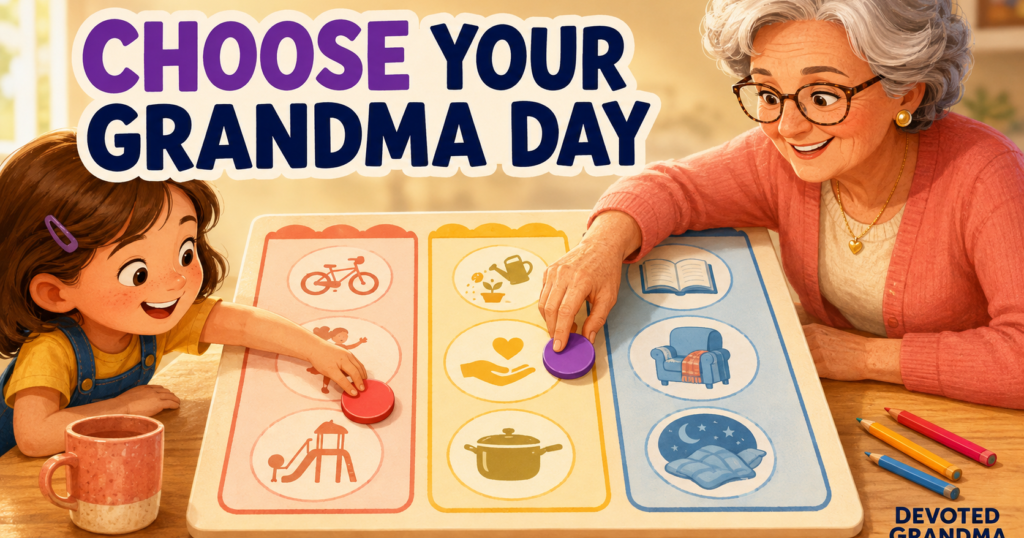
This is not a long wish list or an expensive schedule. It is one sheet of paper with three simple columns: something active, something useful, and something cozy.
Begin With the Boundaries
Before you write any activities, decide what is realistic for this visit. Clear limits make the menu more useful because every choice on it is a choice you can honestly offer.
- Cost: Choose a total amount you are comfortable spending, including food, admission, and small purchases.
- Time: Notice whether you have a whole afternoon or only an hour between other commitments.
- Parent expectations: Confirm any rules about transportation, food, screens, supervision, or where you may go.
- Mobility and energy: Include choices that suit your body and your grandchild’s abilities that day.
- Age: Offer options your grandchild can understand and take part in without turning the whole visit into a struggle.
- Weather: Check that you have at least one indoor possibility if an outdoor plan becomes uncomfortable.
- Distance: Decide how far you are willing to drive, walk, or travel before adding destinations.
Boundaries are not the disappointing part of the menu. They are what allow you to say yes without resentment, worry, or a last-minute scramble.
Make Three Simple Columns
Take a sheet of paper and divide it into three sections. Give each one an easy heading.
Something active
This column holds choices that involve movement or lively play. Your options might include a short walk, music and dancing in the living room, tossing a ball, visiting a nearby playground, or playing an indoor game that gets everyone moving.
Something useful
This is a small task you can do side by side. It should feel satisfying, not like a hidden list of chores. You might water porch plants, prepare fruit for lunch, sort photographs for an album, wrap a birthday present, or choose books to donate.
Something cozy
This column is for slowing down together. Possibilities include reading on the couch, making cocoa, drawing at the kitchen table, listening to favorite songs, or watching one agreed-upon show.
Write only two or three choices in each column. A short menu feels manageable. A page crowded with possibilities simply creates another planning job.
Use Choices That Can Really Happen
Every menu item should pass a simple test: if your grandchild points to it, can you comfortably do it today?
“Go somewhere fun” is too vague. “Walk to the little park after lunch” is clear. “Bake something” may require ingredients and more cleanup than you want. “Decorate refrigerated cookies” may fit the time and energy you actually have.
You can borrow one familiar option from these classic games for a rainy visit, but keep your finished menu small. The purpose is not to present every possible activity. It is to make today’s decisions easier.
If you have more than one grandchild visiting, include choices everyone can join or decide in advance how turns will work. You might let one child choose the active option and another choose the cozy one. For a very young child, add simple drawings beside the words. An older grandchild can help write the menu or suggest one option that fits your limits.
Invite Your Grandchild to Build the Day
When the visit begins, place the menu where you can both see it. Explain that you will choose one item from each column, or two items total if the visit is short.
Use check marks, colorful stickers, clothespins, or small coins to mark the selections. The visible choices help turn planning into something you are doing together.
A child may choose the combination you expected. They may also surprise you by choosing to water the plants, make sandwiches, and read. Let the selection stand if it fits the boundaries you already set.
This is shared agency, not complete control of the household. You are still deciding which choices are safe, affordable, and possible. Your grandchild gets a meaningful say inside those limits.
Make One Backup Combination
Plans change. Rain begins, the park is crowded, someone feels tired, or a parent needs to pick up earlier than expected. Before you start, circle a backup combination that works indoors or takes less time.
For example, your first plan might be a walk, preparing lunch, and drawing together. Your backup could be an indoor guessing game and cocoa at the table.
Present the backup as another good version of the day, not a consolation prize. A flexible plan is still a finished plan.
Adapt the Menu to Your Relationship
If you live far apart, use the same three columns for a phone or video visit. Something active might be a brief stretch or a show-and-tell walk around each home. Something useful could be choosing a recipe for a future visit. Something cozy might be reading the same short story.
If your mobility is limited, “active” can mean active attention rather than standing or walking. Try a hand-clapping rhythm, a seated balloon tap, or taking turns hiding a small object within reach.
If your grandchild is a teenager, skip anything that feels childish to them. Offer realistic choices such as a coffee stop, helping prepare a meal, looking through old photographs, taking a short drive, or choosing music for the kitchen. Give them room to suggest an alternative that fits the same time and cost.
If you want to add a quiet personal touch to a future visit, you might also prepare one of these notes your grandchild can open when they need you. A note can be a lovely surprise, but it does not need to become another required part of the menu.
Save What Worked
At the end of the visit, put a small star beside the choices you both enjoyed. Cross out anything that required too much effort, and add one idea your grandchild would like to see next time.
Keep the menu on the refrigerator, inside a cabinet door, or in a folder with games and art supplies. Before another visit, replace choices that no longer fit the season, the child’s age, or your energy.
The finished menu does not need to look beautiful. Its value is that it gives both of you a place in the plan. Grandma does not have to provide endless entertainment, and a grandchild does not have to wait for every decision to be made.
A good Grandma day can be simple: a few honest choices, one backup plan, and time shaped together.